


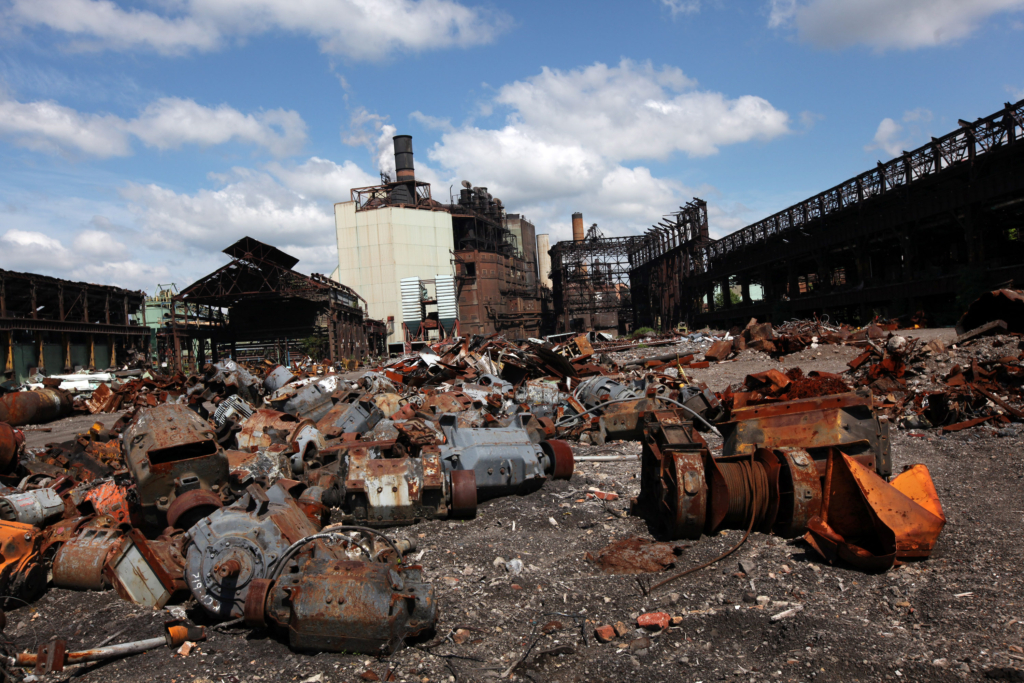
In this interview, Marxist geographer Phil Neel responds to questions by Ege Çoban about his journeys from the Occupy protests to China and Tanzania, his relationship to the communization current, his views on crisis theories, and his recently published book Hellworld.


A slogan from China’s Reforma and Opening-Up period under Deng Xiaoping.
Ege Çoban: Could you tell us a bit about your background? Your background in the rural parts of America, your move to Seattle, China and East Africa all play an important role in your work.
Phil Neel: I was born and raised in a trailer in the Siskiyou Mountains, which is part of the larger Klamath range that runs between rural Northern California and rural Southern Oregon roughly along the Klamath River – which, after a long battle, has just in the last few years seen the world’s largest dam removal project. The area is extremely rural. From where I lived, it took about 5 hours to get to a major city and about 2 hours to get to a real hospital. The area is also geographically expansive and porous, as people working in sectors like trucking and logistics, road repair, forestry, wildland firefighting, seasonal agriculture, and of course all kinds of black market activities, which all entail lots of long-distance driving across state lines: into Oregon, into Nevada, etc. As I describe in Hinterland, this is a region that has seen nearly continuous economic crises, basically since the end of the gold rush in the 19th century. It’s also home to the largest indigenous nations in California: the Karuk, Yurok, Hoopa.
After finishing high school, I then moved over to Eureka, CA, in the redwood forest just north of what’s called the “Lost Coast,” where they had a very cheap community college. That whole region stretching from Trinity County over to the Lost Coast was at the time probably the world’s largest producer of marijuana, which even in the years prior to legalization had become by far the biggest cash crop in California. There were nearly continuous airborne raids by the federal alphabet agencies (DEA, ATF, FBI, etc.), who would drop out of military helicopters with automatic rifles. Similarly, rightwing sheriffs funded mostly by local ranchers and alfalfa farmers were constantly agitating for more extreme anti-drug measures and would often use things like zoning inspections or Fish & Game investigations as secret recon to arrest small-time growers, all justified in racist language of rooting out Hmong or Mexican criminal organizations. So I grew up kind of living in the midst of this low-level counterinsurgency operation.
Since there was nothing to do where I grew up other than walk around in the forest and do drugs, I spent a lot of time reading, hiking, and exploring the bowels of the early internet on our extremely slow dial-up connection. There was also a microscopic punk and experimental music scene in the region and, as elsewhere, a lot of radical history was basically only accessible through subcultural venues like this. Similarly, given the concentration of hippies in the area, you get exposed to a certain lineage of radical environmentalism and its associated debates. But it was only in community college that I could find instructors who put these ideas into context, letting me study radical history, debates in environmental philosophy, and introducing me to rudimentary forms of political-economic analysis. Since the community college was so cheap, it was basically the last remaining working-class form of higher education, and these classrooms were, in retrospect, by far the most interesting and educational I would ever be in.
Since I didn’t have enough money to move to a city to finish college, I instead did what many raised in the hinterland do: I moved out to another, more distant hinterland, in the northwoods of Wisconsin. I enrolled in a cheap little environmental liberal arts school that has since gone bankrupt, where I studied writing, philosophy, and biology as best I could. I worked nights at a hotel to pay the bills, which was great because I got a ton of time to read. Graduating in the immediate aftermath of the Great Recession and planning to move to a city, I found that it was basically impossible to find work. But I’d always wanted to travel overseas and had a little savings from the hotel job. So, inspired by the Red Shirt uprising in Bangkok in 2010, I used the small savings I had to buy a cheap one-way ticket to Thailand, where I arranged to work on an organic farm in exchange for room and board. Though I’d hoped to stay, 7-days-a-week of (even light) tropical farm labor took its toll and I had little time to commit to learning the language or doing much else. Meanwhile, the rebellion had been crushed and the country was under martial law.
As my visa was about to expire, I used up my last dregs of money to buy a ticket back home and eventually found work with the Bureau of Land Management in Nevada. This is the job that finally gave me enough savings to move to a city, and that’s how I ended up in Seattle, where I worked on the city’s southern fringe in a wholesale kitchen and got involved in the local Occupy movement. This was the context in which I started to seriously appraise the political economy of the city and the Northwest as a whole, which also led me to a much deeper understanding of the Pacific Rim industrial complex and, in particular, the role of China. Coincidentally, I also ended up meeting several communists with different connections to China who were also involved in Occupy Seattle. Realizing that I desperately needed not just an abstract philosophical understanding of capitalism but also a practical, empirical grasp of how the logic of capital played out in reality, I decided that I would learn Chinese and try to get into a grad program in Geography, which seemed like the only social science that still had a coherent Marxist current.
I used savings from the kitchen job to fly out to Kunming, a cheaper lower-tier city in China’s Southwest, where I enrolled in a Chinese-language program. At the time, Kunming was extremely affordable and plane tickets were fairly cheap as well. As a result, it was actually cheaper for me to fly to China, rent a room, and pay tuition at Yunnan University, than it would have been to take Chinese courses in Seattle. However, I soon had to come back to the US to face charges associated with the 2012 May Day riot. After I returned, I went to work in the fast-food sector and was also helping organize the campaign to get the minimum wage raised, leading these walkouts, doing outreach, etc.[1] I’d also continued applying to grad schools despite being rejected in earlier rounds, and finally got accepted into the Geography program at the University of Washington.
Ironically, I was soon after found guilty of those riot-related charges, and had to serve time in work release during my second or third quarter of grad school. So I had this very strange experience of commuting in to the university from a special jail downtown to work as a teaching assistant, attend seminars, hold office hours, etc. and then I’d ride the bus back to my cell at night. Even after I got out of work release, I couldn’t’ actually afford to live anywhere near the university and instead had to commute up form the poor working class suburbs encircling Seattle. Similarly, I didn’t have any academic connections or research grants, so I was still working in food service alongside my work at the university. That experience gave focus to my Master’s research on the suburbanization of poverty and its link to rising employment in low-end services and logistics-industrial complexes in the Puget Sound area.
Throughout, I continued to go study Chinese and return to China whenever I could. I did language-learning and research trips over the course of the 2010s and happened to be in Hong Kong in both 2014 (in the lead-up to the umbrella movement) and briefly in 2019 as well, right at the height of the uprising. By that time, my research began to center on industrial areas in the Pearl River Delta, where many of the factories were downsizing, mechanizing, and relocating to either the Chinese interior or to new export-hubs in places like Northern Vietnam. So this naturally led me to studying Chinese outbound investment and, through a series of incidental decisions, I wound up studying Swahili and travelling back and forth to Tanzania, where I’d live for a bit and do my field work for my dissertation. Once I finished the dissertation, however, I found myself without steady work. I moved south to Tacoma, WA, doing freelance research, mapping, editorial, and translation services from home, taking on warehouse jobs, and working in the AI supply chain.[2] More recently, I moved out to Nashville, TN, where I’m researching industrial trends in the US South.


A scene from Aaron Benanav’s visit to an urban village in Guangzhou, Guangdong Province, China.
EÇ: There is a distinct way you interweave your personal life into your theoretical considerations, that is considerably different from recent auto-theory works like The Argonauts by Maggie Nelson. How would you describe your approach to mixing first-person accounts with critical social theory?
PN: When I was originally studying writing, my focus was almost exclusively on fiction. For that reason, I never committed a lot of time to intentionally studying creative non-fiction. And back when I was in English departments the term “autotheory” had not even been popularized, nor had I read any of the examples that would later be canonized as early case studies in the genre. Instead, I was studying the work of American Naturalist authors like Crane and Dreiser. At the same time, I was also reading a lot of environmental theory and environmental writing uses an entirely different approach to creative non-fiction. Though still an autobiographical approach to theory, it’s not usually included in the “autotheory” moniker and really doesn’t fit the genre in terms of style. So I was passively absorbing the sort of field study writing of authors like Edward Abbey and Aldo Leopold, who differ from the autotheory people in that they also deploy very careful fictive mechanisms to create an immersive narrative focused more on the landscape and less on themselves.
In retrospect, I guess I would say that my current approach maybe actualizes the proposed method of the original Naturalists like Zola, who aimed to approach writing in this quasi-scientific way, equating the novel to the scientific experiment. But whereas the Naturalists sought to craft a realistic documentation of human psychology within a given environment, necessarily rendered in a fictive form, I instead take my own embodied experience of class and the environment crafted by capital as a sort of experiment, documenting the megastructural forces that have shunted me across the surface of a planet transformed by those very forces, thereby tracing out the collective subjectivity of which I am only one small part. In doing so, I’ve also discovered in hindsight that my literary approach also draws quite heavily from the environmental writing I describe above. In a more intentional register, I also study the style of cosmic horror authors like Thomas Ligotti and Algernon Blackwood, since this is an equally “Naturalist” genre that places human psychology in midst of massive forces beyond its control, albeit in a different sense.
EÇ: When reading your book I was surprised with regards to the wide range of reference points you manage to use in ensemble. Paul Mattick, Jacques Camatte, Mike Davis were all figures I expected to come up. But Ray Brassier I did not expect to see. In light of this, which thinkers would you say have most influenced your theoretical orientation? How do you synthesize your various interests in geography, political-economy and philosophy?
Actually, I almost studied under Brassier. I’d contacted him, applied and gotten accepted into his program there in Beirut but they didn’t offer any sort of teaching or research work to pay the bills, so it wasn’t a possibility. I’d always had an interest in philosophy but had never had any resources to pursue it, aside from these environmental theory courses at rural colleges and whatever critical theory I could sop up from English departments. Nonetheless, environmental philosophy introduced me to the “new materialisms” blogs which were popular in the years around the Great Recession, when “speculative realism” was all the rage. Most of that stuff seems like a bad joke now and the snake-oil panpsychism of figures like Graham Harman, Timothy Morton, and Jane Bennett really isn’t serious philosophy. But I was interested in it as a modern example of the sort of pantheistic Transcendentalism that the Naturalists were reacting to and, by hate-reading these blogs, I was actually introduced to much better thinkers.
While I was working in the desert outside Winnemucca, NV, I had started to really intensively study Badiou and Brassier, who were each foundational influences for me. Secondary work by thinkers like Adrian Johnston and Benjamin Noys were also very important to my intellectual development, as was Žižek’s reading of Hegel and the critiques of Deleuze and Latour leveled by Žižek and Badiou. Meanwhile, I was also deeply influenced by work in philosophy of mind and philosophy of science. Gould’s Structure of Evolutionary Theory and Lewontin’s The Triple Helix were major touchstones, as were the debates around The Embodied Mind, The Physiology of Truth, and The Ego Tunnel – all three introduced to me by a Buddhist philosophy professor who specialized in Wittgenstein and ran an Aikido studio out of a decommissioned church in Northern Wisconsin. In the past decade or so, I’ve focused mostly on reading Chinese philosophy, with an emphasis on Mozi and Xunzi as interpreted by contemporary thinkers like Tao Jiang, Brook Zipporyn, and Chris Fraser.
Within communist thought, you’ve noted some of the important influences already. But within geography, I’m very heavily influenced by a current of Marxist thought that existed in the late 1980s and early 1990s, which tried to translate high-level Marxian theory into a meso-level analysis of geographic industrialization. Michael Storper and Richard Walker’s book The Capitalist Imperative is the hallmark text and I draw very heavily from it in Hellworld. But the work of Trevor Barnes and Eric Shephard is also notable in this period, as are the canonical geographic studies of Doreen Massey. This lineage of radical economic geography was soon overtaken by the linguistic turn in the field, as elsewhere. But it gestures toward an interesting road not taken. Other influences are evident in Hellworld, including Robert Brenner, the work of the Endnotes collective, Simon Clarke, Werner Bonefeld, and thinkers like Guido Starosta and others associated with the CICP in Argentina.
EÇ: You argue -along with Jasper Bernes- that the spatial restructuring of capitalism has produced a kind of “logistics proletariat.” How do you see their class position differing from the traditional industrial working class, and what are the implications for revolutionary theory?
PN: I’m not sure that I would phrase it this way, and I’m not sure Jasper would either. That’s a position that seems to be associated more with figures like Kim Moody and some others at Labor Notes, who are kind of looking for whatever new mass employment sector might be a fertile field for unionization. I’d just argue that there is nothing that distinctive about logistics workers, they’ve always been part of the proletariat and this is by no means the first time that the logistics sector has been a fast-growing, core part of local economies. In fact, in Hellworld, I talk about how logistics workers were one of the key sectors leading the postwar, anti-colonial strike wave across much of Africa. I don’t think there is any difference in their class position compared to the “traditional industrial working class” and, in fact, I don’t think a “traditional industrial working class” existed in the way that most people think it did. That is a post-facto myth created by overgeneralizing a few exceptional forms of labor deployment from a very narrow period in capitalist history – forms of labor deployment that were, in part, created through many preceding decades of militant labor organizing. Mike Davis’s book Old Gods New Enigmas is a really good historical breakdown of what that “traditional industrial working class” was actually like.
If you look in any detail at the history of labor organizing, you very quickly recognize that today’s situation actually resembles that faced by militants in the early industrial era and on the early peripheries of the capitalist system. So there’s nothing fundamentally different, it’s just a matter of understanding the details of our current situation and managing the new geographic scope of some of these questions – which is one reason why internationalism is no longer a theoretical or strategic goal but instead an immediate practical necessity for organizers. Nonetheless, I’ve worked in the logistics sector (again, see my “Quarter-pounds of Flesh” piece) and, given some of the labor regimes and the pace of mechanization, I’m not confident that it is as fertile ground for organizing as some others seem to believe. Even if it’s necessary to organize within it, I don’t think it will be the first industry to spawn mass militancy. The recent and extremely admirable attempts to organize Amazon warehouses have demonstrated these difficulties. They’ve been good at creating cores of militant workers, and bad at mobilizing masses of logistics workers. I certainly hope to see more attempts, of course, because cracking this riddle will be essential to building sustainable radical organizations able to survive in the long run. Nonetheless, other mass employment sectors like healthcare, education, and even food service have more factors in their favor and have seen quite a bit more mass activity so far.
None of this is to say that there are no differences between today and the past, only that they are not “fundamental” differences in the sense of living under some new variety of capitalism distinct from all others or needing vastly new forms of revolutionary organization. The basic principles remain the same, even if some conditions have changed. Deindustrialization (inherently paired with globalization) is the most important of these trends and, as part of deindustrialization, these rings of poorer logistics suburbs have arisen around US cities. These new working-class suburbs are the most important site for organizing in the present moment. This isn’t because everyone in these neighborhoods works in logistics – they don’t, even if the logistics complexes are major employers that anchor the neighborhoods – but because we see in these neighborhoods a concentration of increasingly disaffected proletarian population physically placed alongside critical infrastructure.
In Hinterland, when I point this out, I think many people misread it as suggesting an imminent strike wave in logistics. But what I was instead saying is that these new suburban concentrations of poverty will become increasingly volatile and, if that volatility can be directed away from the central cities (the standard site of performative politics in the US) and toward the actual sites of power within these very neighborhoods, the result would be explosive. In 2020, we saw half of this equation: in cities like Seattle, Portland, and Atlanta, young people from these near hinterlands were likely the single biggest demographic driving the uprising, especially in its first week. But most of this activity remained centered on the metropolitan core. There were a few exceptions in hinterland cities: Rockford, IL, for example, saw particularly notable mobilizations, and some looting occurred at a shopping mall in the suburb of Tukwila, WA and throughout suburban Los Angeles. Similarly, after the killing of Rayshard Brooks in Atlanta, the core of the uprising shifted southward, closer to the urban fringe. But none of these cases saw assaults on actual sites of power in these hinterlands. This was demonstrated decisively (and this is where I would mark the “end” of the uprising) when mass mobilizations in Louisville, KY in response to the Breonna Taylor verdict at the end of the summer made no move to march on the UPS Worldport – one of the country’s most crucial logistics hubs – all while the Teamsters never even contemplated shutting it down from the inside.
EÇ: Communisation theory often emphasizes the near immediate abolition of the value-forms of commodity, money, interest etc. —how does this square with your observations of actual struggles in the peripheries, where basic survival is often the first concern?
PN: This depends on what we mean by “immediate.” I actually do not think most “communization” thinkers argue for “immediate abolition of the value-form” in the temporal sense of, as soon as the revolution begins, you will stop using money, stop treating things as commodities, have no wages or alternative means of remuneration, etc. If you read what they write, it’s usually a bit more of a philosophical sense of “immediacy,” as in operating without the “mediation” of either a revolutionary workers’ state or without the specific hybrid stage of socialism in which the conditions for abolition are first put into place. So the point is more that the abolition of value doesn’t require these forms of mediation which pose intermediate goals that then become ends in themselves. In the temporal sense, we could say that the difference is simply that communism can immediately become the end goal of proletarian organizing. The transition can begin on day one, rather than first requiring the construction of some intermediate society.
I’m not sure if it’s an intentional or malicious misreading, if people just don’t actually read the theory, or if they have problems with reading comprehension, or maybe it’s just the poor philosophical writing, but you do see this common confusion where people pretend that what is meant is “immediate” in the temporal sense and use that to criticize a strawman argument that doesn’t really exist. If we compare the process of social transformation to the process of an unhealthy person wanting to get healthy, for example, people imagine that communization is saying that we will go from unhealthy to healthy overnight. And they’ll counter that of course this is a fantasy, you first have to have initial steps toward healthy living, that these need to be incremental, etc. But the communization critique is that these incremental steps, as “stages” mediating the process, tend to become ends in themselves. In fact, the critics are like those people who are continually saying that they will get their shit together and start working out, but they need to wait for certain conditions to be met. Once they move to a new apartment, once the new year starts, once they switch jobs, etc. Or, if they do start working out, they just sort of do the same basic things without progressing: they get on the treadmill for half an hour, they lift the same weights and go through the same motions without variation, they add some salad to their diet. So the communization people would say something like: stop focusing on the initial steps and indefinite preparation and instead focus on actually progressing toward the end goal. Stop talking about getting into shape and actually do it. Begin the transition now, don’t defer it via endless intermediate stages.
That said, I’m not a communization theorist. I do not like the framework or the term. I do not think there is anything special about our era that makes us any more (or less) prone to building communism today than we were in the past, though perhaps the possibility becomes more clearly visible or more necessary. I certainly draw a lot of influence from theorists associated with the current, but that’s simply because they are good, interesting, and rigorous Marxist thinkers. As for myself, I consider myself an entirely orthodox communist. That includes both the Marxian aspect, as well as the sequence of practical lessons learned in the long history of struggle and elaborated in theories of revolutionary organization. In this respect, I think many within the communization current do not focus enough on the frictions that arise in the pragmatic process of building power in a hostile world, even if they do a great job of symptomatizing the limits faced by existing uprisings and relating them to large-scale, structural trends. In other words, while they’re very good Marxists, they’re often not very good Leninists.
It is necessary to think quite hard about the likely sequence of social transformation, the forms of revolutionary organization that would be needed to channel that process, and the geopolitical, administrative, and economic demands placed on any revolutionary force that emerges and holds any territory. In this regard, we still do not have any better living examples than the saga of the Soviet Union, the protracted people’s war in China, and the struggle for survival by isolated revolutionary states like Cuba. These are also case studies in the extreme ways that revolutionary societies can degenerate, either into bizarre chimeras like North Korea or, more conventionally, by melting back into the liberal order, as in Russia and China. Similarly, in both the far hinterlands of capitalist society and in the deindustrialized, metropolitan cores, very rudimentary issues of access to basic social infrastructure remain primary. These are, classically, questions of “development” and even “(re)industrialization.” Liberals are essentially the only ones able to even broach these questions, and the currently ascendant current of liberalism (which describes itself as “socialist” or even, sometimes, “Marxist”) at least offers an attractive idea of what this process might look like, with case studies in places like China and Vietnam.
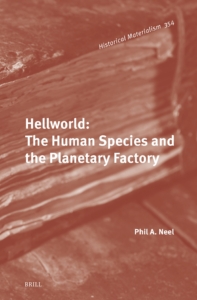

EÇ: You are known for your criticisms of developmentalism as a paradigm- from Friedrich List to Rostow all the way to Lewis and Samir Amin on the other end political spectrum. Could you briefly summarise your arguments regarding this tradition, especially with a focus on what you call ‘proletarianisation without industrialisation’ the book?
PN: We find ourselves in a strange position today. In both the wealthiest and the poorest countries, younger people have experienced entire lifetimes of economic stagnation. Infrastructure built fifty, sixty years, a hundred years ago lies crumbling around us, patched and repatched, but rarely replaced. Building anything new turns into an indefinitely delayed and invariably inflated scam shuttling between different strata of established interests, each with its own grift. The final result is invariably flimsy, ugly, cheaply-made, and over-priced. In these conditions, capitalism no longer appears to be a developmental force. It is therefore understandable why, for so many young people, development itself seems to be evidence of a non-capitalist logic at work. Distant images of glittering cities rising across East Asia appear to offer a socialistic counterpoint. In reality, this is just the endless repetition of an old story in which ascendent centers of capital are always initially portrayed as some better, more humane social order freed at last from the force and fraud of what came before, and, more often than not, idealized by socialists from afar.
However, continuing the theme from the last question, I’d say that issues of “development” should, in fact, be a primary concern for communists. Communists ought to be able to offer an alternate path for achieving basic developmental gains in a more equitable fashion – things like megaprojects to roll out universal access to electricity, internet, clean water, and nutritious food, build out affordable housing, protect against rising sea levels, drive back desertification, construct agroecological metabolic networks capable of sustaining modern urban agglomerations, etc. – and even an alternate program of industrialization (including in deindustrialized countries) that more rationally distributes the collective scientific-technical-ecological knowledge base of the species. Moreover, we should be able to offer at least some idea of how revolutions confined to the poorest parts of the world might achieve some of these gains without simultaneously submitting to the forms of extraverted development (such as export processing) that are the universal recommendation of liberals, whether of the “neoliberal” or “socialist” variety. And, again, despite their ultimate failure, the historic examples of socialism in the 20th century offer invaluable case studies.
Whatever this approach to development might look like, however, it must also be rigorously connected back to those first principles of communist critique. Development is not the ends of the communist project, it is simply one of the necessary means used to achieve a grander flourishing for the species, beyond the bounds of the law of value. The types of developmentalism I critique are, precisely, forms of liberalism that take the means of development to be the ends itself. So-called “socialists” who think that socialism is nothing more than equitable development are simply restating the fundamental faith of liberalism itself. Aside from this, the book is really not making any argument about a coherent position called “developmentalism.” It is instead etching out a history that demonstrates an endless recurrence of the same developmental themes in new guises, each of which mythologizes itself as some fundamental departure from capitalism and each of which proves to be only more of the same.
The basic point is simply that capitalism is, in fact, a developmental force and it always has been. Even if it is also an engine of destruction and underdevelopment, it is quite clearly capable of lifting hundreds of millions of people out of poverty. The catch is that it then throws others back into poverty, increases inequality so that the always-temporary “middle class” dissolves, and further reinforces existing deprivations elsewhere. Since capitalism is capable of development, “development” alone is not an escape from capitalism. In fact, it more often serves as the Faustian bargain through which territories are better integrated into capitalist society, where they can be more rigorously disciplined by the logic of the market. Proletarianization without industrialization is one of the forms that this takes today, where integration into the market more often than not simply brings new forms of dependence without much development – or, more accurately, with an intensive, extraverted development of extractive infrastructures and related assets.
EÇ: In Chapter 12 of the book you focus on what we might call a crisis about crisis, an inadequacy in our terms with respect to understanding what a crisis is. With the notion of ‘polycrisis’ gaining increasing popularity in the social sciences, which strains of crisis theory do you think are most adequate to our times?
PN: This is really a topic that requires a book of its own, devoted to detailing the various strains of crisis theory that have become prominent in the last few decades. Far too many of our debates about crisis are still stuck in the 1970s, contrasting underconsumptionist, overproductionist, profit-squeeze, falling-profit, etc. accounts in both a theoretically and empirically archaic fashion. This coexists with a colloquial aesthetic of crisis which is not really a theory at all but instead a catastrophist faith in some coming collapse, perhaps due to absolute ecological limits. At the same time, as you mention, we have new liberal theories of “polycrisis” that draw from liberal philosophy (namely complexity theory and the work of Latour) to offer an eclectic and empiricist but nonetheless scalable notion of crises as incidental failures of policy. So the question I pose at the end of the book is how might communists conceive of crisis as it actually exists and how, if at all, is this linked to long-run tendencies visible in the history of capitalist society?
I then sketch my own reconstructed theory of crisis that links momentary, lower-case “crises” to secular, upper-case “Crisis” in the sense of a long-run and continual tendency toward breakdown, contrasting this theory to the non-theory of some imminent collapse of the system. I note how both theories of crisis and critiques of crisis theory usually conflate these three: Crisis, Breakdown, and Collapse. The theory of collapse is not really a theory of crisis at all, it’s just an aesthetic rooted in magical thinking. But theories of individual crises are also insufficient – if you are just looking for a theory of individual crises, you’ll end up somewhere near the “polycrisis” concept. Instead, we need a theory of secular crisis or breakdown to tie them together. In other words, we need an idea of the basic dynamics of the social field underlying these individual crises that also tracks long-run tendencies in these dynamics. This larger-scale theory of crisis is not only distinct from a theory of collapse but is actively opposed to it, serving as the antidote to the colloquial notion of imminent systemic collapse embraced by many across society and within radical circles – particularly popular, we might as well admit, among the so-called “Tiqqunists” and other anarchistic (or “post-anarchist”) currents.
In so doing, I draw from a wide variety of both historic and contemporary communist thinkers who approach the question of crisis in different ways. If I were to write a book on the topic, I might categorize the major currents in contemporary crisis theory in the following fashion, on the understanding that these categories are extremely rough at the moment and contain quite a bit of overlap (note, for example, that David Harvey’s broad and extremely uneven theoretical output results in him being listed multiple times in different categories). It’s also not meant to be an exhaustive list of specific theorists but instead a list of broad currents of thought, focusing only on those that have demonstrated some substantial momentum in the last few decades. Ultimately, think of this as nothing more than a bit of brainstorming.
First, we have liberal theories:
- Polycrisis: As a fundamentally liberal notion, each crisis must be placed in its relevant and separate categorical sphere (i.e. economic crises vs. political vs. ecological, etc.) and there can be no “theory of crisis” as such since each crisis is an incidental failure of policy or accident of history. They’re connected through a graph structure of one-to-one relations, like particles knocking together. Which means that they are really only unified by the fact that they exist in the same time period and therefore act and react with one another. But there is no underlying field producing or structuring these individual crises. In other words, as with most facets of liberal thought, “society” does not exist as an emergent realm with a supervening force over its constituent elements, which means that crises occurring in distinct spheres of life cannot be perceived to have a shared social cause. The major thinker of this theory of crisis is Adam Tooze, who draws from Latour and the work of well-known radical liberal theorists like J.K. Gibson-Graham to justify the underlying philosophical framework. But this has become a massively popular tool to explain crises and Tooze himself was merely appropriating it from its already-common usage in outlets like the World Economic Forum. But you do find Marxists who, in rejecting the possibility of a Marxian crisis theory, essentially find themselves left with nothing more than an incidental understanding of crisis. Michael Heinrich would be at the forefront here.
- Yin-Yang Cycles: There are also certain liberal thinkers who recognize that, beneath the incidental surge of individual crises, there do appear to be secular dynamics to growth. They also recognize the persistent reality of stagnation in high-income economies. For some, this stagnation may be somewhat cyclical. Richard Koo offers the best neo-Schumpeterian model of boom-bust cycles with his idea of economies that cycle through a “yang” phase of rapid growth and a “yin” phase of relative stagnation, defined by (among other things) whether firms are actively taking on debt or actively paying it down, with the “balance sheet recession” marking the inflection point between the two. For Koo, each phase requires distinct macroeconomic interventions (roughly: monetarist for growth periods, Keynesian for stagnation periods) and, if not pursued, their respective crises will be worsened. Since Koo’s case studies were the Japanese asset bust and ensuing lost decades, there’s also an implication that downcycles may be getting longer over time.
- Mechanical Malthusianism: This notion that the downcycle is getting longer over time is the basis for another variety of liberal crisis theory that recognizes how the secular dynamics beneath individual crises appear to be resulting in a persistent stagnation in growth rates across all high-income economies which appears to worsen over time, threatening them with “lost decades” of the Japanese type. Robert Gordon is the foremost of these thinkers, though you could also include economics-adjacent scholars like Vaclav Smil and Nassim Nicholas Taleb. For Gordon, the key fact is that there is a subset of “miraculous” core technologies (things like mechanical engines, electrification, vaccines, clean water infrastructure, mechanization in manufacturing, etc.) that drove the initial growth boom in advanced industrial economies and then drove subsequent growth booms as these technologies were rolled out in new locations. Though later decades added a few new core technologies, the bulk of them were invented and rolled out at scale sometime in the century between 1870 and 1970. Since then, there have been no new technologies capable of generating the same type of growth. Meanwhile, development itself has resulted in “headwinds” such as inequality, aging populations, increasingly elaborate and expensive educational systems, etc., all of which weigh down growth further. Thinkers like Smil and Taleb take a step even further back and note that basically all complex systems follow a sinusoidal growth path, where a long plateau of slow growth is followed by a rapid, near-exponential growth burst, that then settles into a higher plateau of slow growth. The cause may be technological in origin (Smil at least often seems to take the same position as Gordon), but it’s also just a basic feature of the mathematics involved in measuring growth: as the mass of the economy gets larger and larger, even enormous additions of new output in the numerator no longer produce the same rate of growth because that denominator is an aggregate of all the growth that has come before. Today, they argue, these “stagnationary” conditions are simply the natural state of a “mature” economy.
- Financialization: This is another liberal theory of crisis, this time derived from classical political economy (namely Ricardian socialism), which draws a harsh line between productive sectors of the economy, epitomized by manufacturing, and an unproductive sectors, of which finance is the foremost example. The basic causal mechanic is simply that increasing financialization distances the “fictive” economy captured in financial metrics from the “real” economy of actual production and thereby brings with it increased speculation and increased volatility. This volatility is what causes crises, which are invariably described as “complex” and even “unpredictable” but which, for the financialization theorist, are always rooted in the inherent disconnect between an inherently speculative financial sphere and an inherently productive “real” economy beneath. Today, this is often accompanied by an underconsumptionist argument as well, since the same process of financialization, carried out through a “neoliberal” program of redistribution, is understood to have caused rising inequality. The logic is basically: if only we channeled capital into the correct, productive sectors, then we could have high wages (enabled by rising productivity) which would allow people to consume more and thereby create a virtuous circle of growth. We can find contemporary representatives in progressive liberal figures like Paul Mason, Yanis Varoufakis, and of course Bernie Sanders. It’s also entered the popular lexicon via terms like neoliberalism. Nonetheless, many ostensibly Marxist thinkers also adopt this basic position, or at least dabble in it: Anwar Shaikh, John Bellamy Foster, Costas Lapavitsas, David Harvey, etc.
Then we have more clearly Marxian theories:
- Stagnationism. This would include a wide range of thinkers who stress the lowering of growth rates over time and explicitly link this trend to lowering rates of profit across the core productive sectors of the economy. The exact mechanics are slightly different, depending on the thinker. On one end, we see figures like Robert Brenner, who describes the Schumpeterian boom-bust cycle and stresses the impact of macroeconomic interventions which, though they successfully soften recessions, also prevent the “clearing” mechanism of mass bankruptcy from adequately restoring growth. Technically, Brenner’s account allows for cyclical recoveries of at least moderate scale – as is visible in his recounting of Reaganism – and the failure to restore growth is therefore, at least in part, political. On the other end, we have figures like Michael Roberts, who extends the classic and somewhat mechanistic falling profit theory from the 1970s into the present, emphasizing the key role played by the rising organic composition of capital. For Roberts, this tendency is secular and, although there may be growth spurts elsewhere, they are limited, on the one hand, and gesture toward an overcoming of capitalism, on the other.
- Bureaucratism. Technically a subcategory of stagnationists, these thinkers tend to stress the rising share of social labor devoted to unproductive and specifically bureaucratic or supervisory tasks over time. Unlike the financialization theorists, these unproductive sectors are not primarily financial. Unlike other stagnationist accounts, this shifting composition of employment is both a symptom and a partial cause of stagnation. This includes thinkers like Fred Moseley who, like Roberts, extended the 1970s falling-profit theory, emphasizing that stagnation would result in rising debt and rising employment in unproductive sectors linked to the state. Many others affiliated with what some call the “Field Notes School” of Marxism dally with this idea in some fashion, though they’d likely fall back on something closer to the “internalist” position outlined below when pushed.[3] Paul Mattick Jr. and Jamie Merchant emphasize the rising share of revenues, expenditures, and employment linked directly or indirectly to the state (and the ensuing rise in national debt), while Jason Smith stresses the rising composition of supervisory and disciplinary service occupations.
- Externalism. Tracing their lineage to Luxemburg, these thinkers tend to associate both immediate crises and long-run breakdowns with extrinsic limits to growth or, more accurately, a particular interplay of intrinsic and extrinsic limits in which the latter are dominant, in the last instance. For Luxemburg, the shrinking of the non-capitalist world was the key dynamic, since it served as the unacknowledged market tying together the circuit of capital. Obviously, that is an untenable position today given the sheer extent of capitalist society and the progress of the global enclosure. Nonetheless, you still see echoes of the position in theories that stress the plundering of “the commons” by capital (David Harvey, Massimo De Angelis, Silvia Federici, Naomi Klein). But the more substantial and serious variant of externalism is found among Marxist thinkers who emphasize limits to appropriation, necessarily read through ecology, gender, and race. Thinkers like Nancy Fraser and Jason W. Moore are the major representatives of this current, though it would also encompass the more narrowly-defined school of social reproduction theory, as represented by thinkers like Tithi Bhattacharya.
- Internalism. Tracing their lineage to Grossman, these thinkers tend to associate both immediate crises and long-run breakdowns with intrinsic limits to growth which manifest in overproduction, and which often falsely appear to be both extrinsic and incidental. Though similar to stagnationist and bureaucratist accounts, this current is broader, placing less emphasis on the simple mechanics of profitability or the weight of unproductive bureaucracy and more on the “general law of capitalist accumulation” visible in rising surplus capital along rising surplus population. The goal is a higher-order synthesis that avoids the perceived pitfalls of both financialization and externalist thinkers. The work of the Endnotes and Chuang collectives are contemporary examples, with Paul Mattick Sr., Simon Clarke, and Makoto Itoh important points of reference. Mattick is probably the only person to have offered a consistent and relatively complete theory of crisis, in my opinion.
- The Crisis of Social Reproduction. This is a somewhat more amorphous category which is often adopted, in part, by both externalists and internalists, each emphasizing different aspects. It might also be referred to as “Neo-Unoism,” since it expands on Kozo Uno’s Theory of Crisis, which stresses the ongoing difficulty of securing adequate conditions to reproduce labour-power as a commodity, leading to a crisis of social reproduction. But it also draws on the work of less well-known Marxist-feminist thinkers like Leopoldina Fortunati. Though it also invokes social reproduction, its understanding of this concept is broader than that of what is conventionally referred to as “social reproduction theory,” stressing the role played by the state. Figures like Makoto Itoh and Thomas Sekine were crucial in popularizing aspects of this theory. But the position is somewhat amorphous. It’s been taken up quite a bit by leftwing scholars in China studies at the moment, because it appraises some of the difficulties in the Chinese labor market very well. For example, both Eli Friedman and Dong Yige use the term regularly. At a theoretical level, the best contemporary examples would maybe be individuals like Gavin Walker, Ken Kawashima, and Werner Bonefeld, and we again see aspects of this in the work of collectives like Endnotes (especially their “Logic of Gender” piece).
My own position tries to reconstruct a more coherent theory of crisis by drawing from several of these currents and distinguishing itself from others. As for the liberal theories: the polycrisis and financialization currents lie on fundamentally incorrect footing and must be systematically rejected. Every aspect of these theories is wrong. At best, they might provide some useful empirical data. But it is still useful to articulate a more coherent theory of crisis in contrast to them because they are probably the most common colloquial understandings of the topic. The Yin-Yang thinkers like Koo and the Mechanical Malthusians contain their kernels of truth, though they fail to grasp the larger picture because they do not understand capitalism to be a social system.
As for the Marxian theories: the externalists ultimately come too close to colloquial notions of crisis as collapse and tend to romanticize (often non-existent) non-capitalist dynamics and exaggerate the relative weight of appropriation in the circuit of capital. Nonetheless, thinkers like Jason W. Moore do recognize and try to escape these problems – perhaps not successfully – and his work is an extremely useful example of how “natural” limits are, in fact, co-produced by capital and how appropriation and exploitation are interwoven. Meanwhile, the stagnationist and bureacratist accounts are partial and often come off as a bit too clean-cut for me, though they certainly grasp key dimensions of the issue. The crisis of social reproduction school is extremely interesting but also undertheorized.
My own position is basically a combination of the internalist and crisis of social reproduction currents, reconstructed in a fashion that accounts for the trends documented by stagnationists and bureaucratists, and sealed with a reminder drawn from Grossman and Mattick that capitalist society can rejuvenate through extreme acts of destruction. The core idea is that Marx offers a theory of crisis not in the drafts for Volume III of Capital, even if the dynamics of profit and competition are important aspects of the breakdown tendency, and not in the drafts for Volume II, even if limits to circulation are often immediate causes of crisis, but instead in Chapter 25 of Volume I, on the “General Law of Capitalist Accumulation,” where he describes how capitalist society will ultimately produce surplus capital alongside surplus labor at expanding scales. That’s the core of the theory of crisis and breakdown that I sketch out in that final chapter of Hellworld.
EÇ: Given the fragmentation and spatial dispersion of contemporary proletarian life, do you believe a new kind of internationalism is possible? Given current trends of economic nationalism and reactionary populism, is our situation not a better breeding ground for the far-right?
PN: In every era it seems like the far-right has the advantage. Similarly, it always feels like proletarian life has reached some new low, accommodated by new forms of demobilization. And, sure, it is never a level playing field. Liberals will always concede to fascists when faced with social instability. New technologies and new spatial regimes of life do, in fact, demobilize people. But that itself is nothing new. In fact, although nationalism and populism might be resurgent, this is actually a sign of instability and instability always means there is a greater potential for left-wing politics than in the past. Similarly, even given spatial dispersion, we saw the largest uprising in fifty years in the US in 2020. Similar uprisings then toppled governments around the world. There are far, far more prospects for communist intervention in conditions of chaos than in conditions of relative social peace. It’s just a matter of resources, bravery, and serendipity.
We might even take this further, in fact, and argue that the rise of the far-right in advance of the far-left is itself serendipitous. That means that you’re going to have all these populist forces gaining power and, ultimately, failing. Even if they do implement their policies with the utmost success, they won’t be able to solve the crises they promised to, they won’t be able to restore growth, they won’t be able to revive the mythic middle class. As a result, they’ll simply stoke hatred against themselves and be more likely to fall into disgrace. Really, many of these populist regimes are going to be running their own Weimar republics and, when the time comes, the most obvious antidote wont’ be more of the same far-right fearmongering nor a return to anodyne Biden-Harris brunchtime liberalism but instead a left-wing alternative buoyed by mass hatred of the failed flag-waving military-industrial pedophile tariff cabal – so long as we can create scalable partisan organizations to make this a reality.
EÇ: Your recent text on Ill Will -“The Theory of the Party”- draws on two very distinct traditions of thought to develop its main argument. Notably, the heterodox maoism of figures like Badiou, Lazarus, Neocosmos and the emphasis on invariance that comes out of Bordiga. In what way, do you think, should we mediate between theoretical lineages like these that are normally opposed to one another?
PN: I’m not sure that these are really that opposed. First, I will say that I think people tend to just confuse Bordiga’s own writing for the strange, cultish left-communist sects that sprung up after his death and called themselves “Bordigist.” Second, people also exaggerate certain aspects of that heterodox Maoist current to make them sound somewhat adventurist. Badiou certainly emphasizes the voluntarist aspect of communist thought, while Bordiga emphasizes the invariant aspect. But we can imagine the two as necessary poles of communist thought, or as the two directions of a swinging pendulum with a single center. Any living theory requires this sort of polarity. The point is to actively balance these two in a dynamic fashion that propels the theory forward. Ironically, Badiou was also the less politically active of the two, quickly reduced to a mostly academic role, while Bordiga, often portrayed as a quietist, helped to found and lead one of the most militant communist parties in Europe at the very peak of European revolutionary activity – a good hint that our conventional image of these thinkers is not all that it seems.
EÇ: Finally, could you talk about your future projects? Any on-going research on the horizon?
PN: For the most accurate updates on what I’m up to, you can follow my Substack The Planetary Factory. Most of the stuff I post on there is free or is only paywalled for a short time, with the exception of advance drafts of articles and other forthcoming projects. Here’s a summary of some of those forthcoming projects:
- After spending the last couple years working gig jobs in the AI industry, I’m currently expanding an article that got out of hand into a very short book on this industry, with a focus on what I call the AI assembly or manufacturing process. Paid subscribers can see a very early draft of the first part of that project on the Substack right now with further parts to come.
- You already noted the “Theory of the Party” piece, which is the first in a series of articles on questions of organization. The second will be out in Heatwave magazine sometime in the spring or early summer of 2026. Hopefully I’ll then have time to start writing the final volume in the Hinterland and Hellworld trilogy, which will focus on these topics.
- I’m also engaged in ongoing research on industrial trends in the US South, with a focus on the role played by inbound investment from across Asia. I’ll be starting a series on that topic on the Substack soon. Some of the case studies will be the recent deal between the Tennessee government and Korea Zinc, the rise of the auto industry in Alabama, the ecological impacts of recent industrialization across the region, and the rise of suburban industrial clusters in places like Smyrna, TN.
[1] I wrote about the experience here: Phil A. Neel, “Sweet 15”, The Brooklyn Rail, July/August 2014. https://brooklynrail.org/2014/07/field-notes/sweet-15/
[2] I wrote about one of these warehouse jobs here: Phil A. Neel, “Quarter-Pounds of Flesh: Part One”, The Brooklyn Rail, Dec/Jan 2024-25. < https://brooklynrail.org/2024/12/field-notes/quarter-pounds-of-flesh/>; Phil A. Neel, “Quarter-Pounds of Flesh: Part Two”, The Brooklyn Rail, February 2025. https://brooklynrail.org/2025/02/field-notes/quarter-pounds-of-flesh-2/
[3] The name refers to the Field Notes section of the Brooklyn Rail magazine and its affiliated book series which, under the editorship of Paul Mattick Jr., has become a distinctive current in contemporary communist theory. Since I am myself a regular contributor to Field Notes (in fact, Hinterland was published through the book series), I’m usually included in this group.